หลักสูตรฝึกอบรม
หลักสูตรการควบคุมคุณภาพแบบ QC story
วิทยากรประจำหลักสูตร
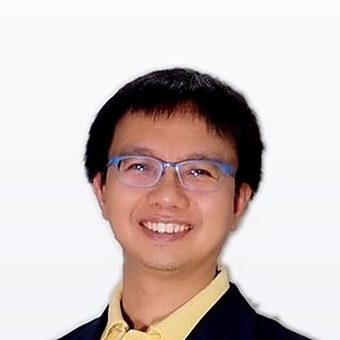
จีรศักดิ์ ม่วงชิน (Jeerasak Muangchin)
ผู้ตรวจประเมิน / วิทยากร – ระบบยานยนต์ คุณภาพ สิ่งแวดล้อม อาชีวอนามัยและความปลอดภัย และความมั่นคงปลอดภัยสารสนเทศ · ผู้ตรวจประเมินขึ้นทะเบียน IATF · Certified in Cybersecurity (CC) · DPO Certified Level 1 & 2 (ICDL)
- ปริญญาตรี เทคโนโลยีสารสนเทศและการสื่อสาร (มสธ.) · ปริญญาโท MBA (มหาวิทยาลัยรามคำแหง หลักสูตรนานาชาติ) · ปริญญาตรี วิศวกรรมไฟฟ้ากำลัง (มจธ.)
- Lead Auditor และวิทยากรกับหน่วยรับรองระดับสากลตั้งแต่ปี 2006 · เคยเป็นวิทยากรหลักที่ได้รับอนุมัติสำหรับหลักสูตร IRCA ISO 9001 Lead Auditor
- ประสบการณ์ 4 ปีในตำแหน่ง Division Manager โรงงานอุปกรณ์ไฟฟ้าและฉีดพลาสติก ทำงานกับทีม APQP, MSA, SPC และ QMS
- ตรวจประเมินและสอน IATF 16949, ISO 9001, ISO 14001, ISO 45001, ISO 22301, ISO 39001, ISO/IEC 17025, ISO/IEC 27001 และ 27701, ISO 13485, ISCC, RSPO, คาร์บอนฟุตพริ้นท์ (CFO/CFP), Core Tools (APQP, PPAP, FMEA, MSA, SPC), VDA 6.3 และ TISAX
ภาษาที่สอน: ไทยและอังกฤษ
วิทยากรของแต่ละรอบยืนยันเมื่อสมัคร

Course Summary
Every process has specific goals so that its output meets the needs of the next process, all the way to the end customer. Each process depends on key factors such as people, machines and equipment, materials, methods and environment (5M1E).
No factor stays perfect and suitable all the time; whenever one of them goes wrong, problems arise.
A problem is the gap between the actual result and the target or expected result. It may be measurable or felt, but every problem must be corrected and prevented from recurring. Manufacturing uses many problem-solving approaches, such as QCC, QC Story, 8D, 5 Principles and CAR. These are processes only; people who know the process but not the tools for analysing and presenting data may still fail to solve the problem.
Originally, a QC Story was a report used in organisations to explain past problem-solving simply. QC Story activities showed that this approach leads to good problem-solving steps that are easy to understand and help improvement activities progress steadily.
Today QC Story is regarded as a basic strategy for problem-solving activities, beyond just a reporting format.
QC Story is "a step-by-step approach to correction or improvement, developing people to understand the story of a work-process project through systematic PDCA activities".
Course objective
- Understand the QC Story problem-solving principles and process of the Japanese Standards Association, the tools for root cause analysis, and how to decide on suitable countermeasures
- Build skills in cause analysis and in choosing the right way to deal with each problem
Session Agenda
| Day and time | Topics |
|---|---|
| Day 1 09.00 - 16.00 | Introduction: business success indicators · Problems and perspectives on how they occur and are solved · Problem-solving with PDCA · The 8 QC Story steps and the QC 7 Tools · STEP 1 Select the improvement theme: review your unit's role, list and collect problems, evaluate problems with the JSA table and summarise the theme · STEP 2 Give reasons for the theme: identify impact and motivation · STEP 3 Analyse the current situation: collect detailed data, prioritise problems for cause analysis (Pareto), set targets using the opportunity formula · STEP 4 Identify root causes, select solutions and plan activities: analyse and score causes, confirm causes, propose solutions, evaluate them with a scoring table, prepare the action plan · STEP 5 Implement the plan · STEP 6 Monitor and evaluate results: collect data, compare results with targets · STEP 7 Standardise: set standards and control points, training, data collection, confirm results are sustained · STEP 8 Study other problems and select the next theme · 50% lecture, 50% workshop: QC Story workshop kit with QC 7 Tools, brainstorming and realistic simulated activities |
| Day 1 16.00 - 16.30 | Course summary, suggestions, questions and answers |
Target Audience
Supervisors, employees and anyone interested.